
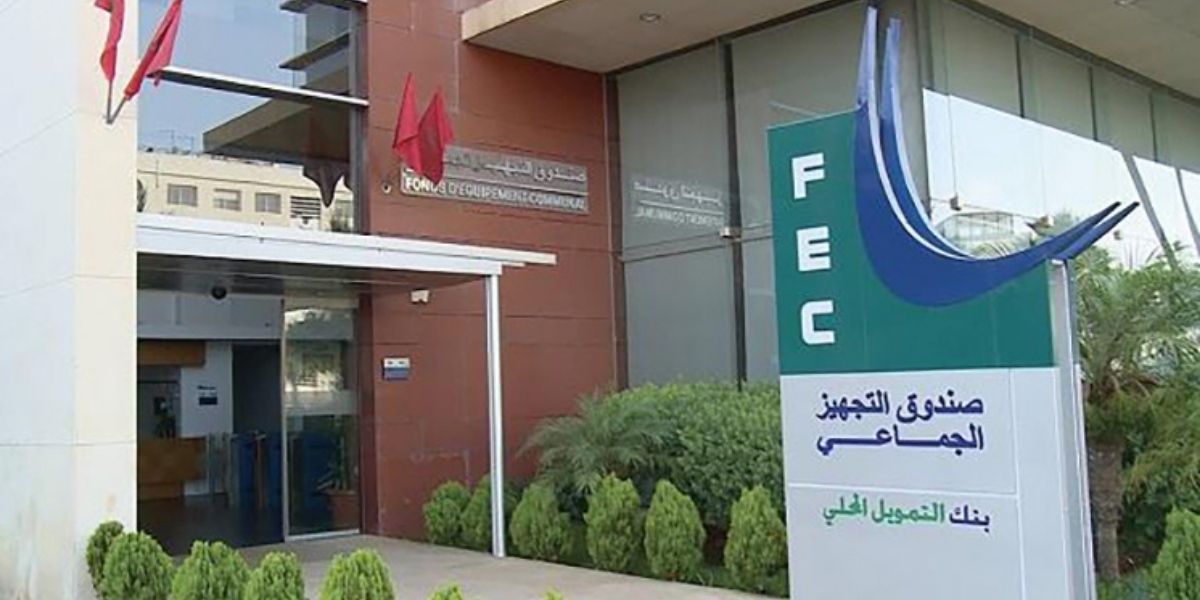
As part of the annual update of its certificate of deposit issuance program, the Municipal Equipment Fund (FEC) confirms its commitment to transparency towards investors and to preparing for the future financing needs of local authorities.
In its reference document for the 2024 financial year, the public institution also outlines its medium-term outlook. These ambitions are set against a backdrop of profound institutional and budgetary changes, marked by the acceleration of the advanced regionalization process and the strengthening of local governance.
Strengthening the FEC's position in the territorial financial landscape
The FEC plays a key role in leveraging financing for local authorities, offering them both tailored credit products and financial consulting and engineering services. Looking ahead to 2025-2026, the institution intends to further consolidate its position as a central player in budgetary decentralization and local investment.
Among the strategic priorities identified is the continued expansion of the client base, with particular attention paid to inter-municipal cooperation bodies and new forms of territorial pooling. It also involves diversifying the financial products offered to meet more complex financing needs, particularly in the areas of ecological transition, sustainable infrastructure, and climate resilience. One of the conditions for implementing this strategy is strengthening the FEC's equity capital.
In a context of increasing local public investment needs, the institution seeks to preserve its financial flexibility while maintaining solid solvency indicators. Access to long-term resources on sustainable terms remains a priority, particularly through partnerships with international donors.
In this context, 2024 was marked by the signing of two major financing agreements: one with the African Development Bank (AfDB) and the other with the French Development Agency (AFD), for a total of €200 million. These new resources will finance structuring projects in the regions, while also diversifying the ECF's funding sources.
Risk management and adaptation to new requirements
In response to evolving economic, climate, and operational risks, the FEC affirms its commitment to strengthening its risk management function. The reference document outlines plans for enhanced internal assessment, monitoring, and prevention mechanisms, particularly in relation to prudential requirements and financial ratings.
In parallel, the FEC plans to deepen its commitment to social and environmental responsibility. This involves the more systematic integration of ESG criteria into the analysis of funded projects, as well as the deployment of incentive products for green investment, in line with national sustainable development priorities.
Anticipating the evolution of the institutional framework
Finally, the FEC's prospects are closely linked to the evolution of the institutional framework for local public action. In a context of advanced regionalization and the growing power of regional councils, the FEC intends to strengthen its capacity to support local areas.
The institution is gradually adapting its offering to meet the emerging needs of a changing institutional landscape, thereby affirming its position as a strategic partner of local authorities.
In an environment marked by the need for more inclusive, sustainable and structuring local investment, the FEC is thus drawing up a roadmap that combines financial prudence, product innovation and commitment to territorial development.